Bi-fold A4 Size Flyer 3d Design Mockup: A Comprehensive Guide for Professional Presentations
In the competitive landscape of visual marketing, the difference between a design that is merely seen and one that is truly understood often lies in how it is presented. Professionals, designers, and business owners frequently face the challenge of conveying the final look of a printed product before it ever leaves the digital realm. This is where a Bi-fold A4 Size Flyer 3d Design Mockup becomes an indispensable tool. It serves not just as a display method, but as a strategic asset that bridges the gap between abstract concepts and tangible reality.
This guide explores the specific utility of this mockup format, analyzing its technical specifications, practical applications, and how it compares to other presentation methods. By understanding the nuances of this resource, you can make informed decisions about your design workflow and client communication strategies.
Understanding the Core Value of Bi-fold A4 Mockups
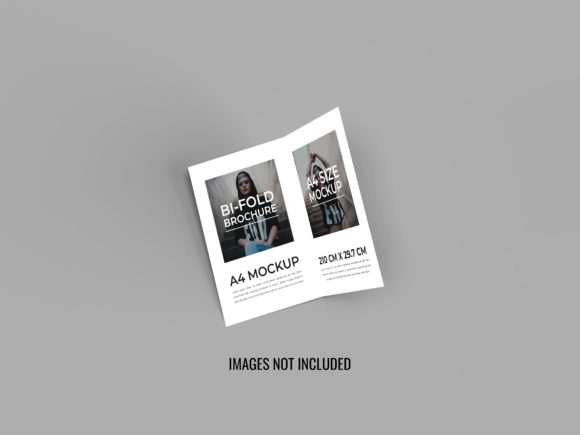
A Bi-fold A4 Size Flyer 3d Design Mockup is specifically engineered to simulate a standard A4 sheet of paper folded once down the middle. Unlike flat layouts or simple single-page previews, this format captures the physical dimensions and structural integrity of a finished brochure. The "3D" aspect is crucial; it introduces depth, perspective, and environmental context, allowing stakeholders to visualize how the flyer will sit on a table, be held in a hand, or appear in a retail environment.
The distinct advantage of this format over standard 2D previews is the ability to assess spatial relationships. When designing a bi-fold, the interplay between the front cover, the inner spread, and the back panel is complex. A 3D representation allows designers to check alignment across folds, ensuring that critical text or imagery does not get lost in the crease. It transforms a static image into a dynamic scenario, providing a realistic preview that significantly reduces the risk of costly printing errors.
Technical Specifications and Workflow Efficiency
For those evaluating resources for their design toolkit, the technical attributes of a high-quality mockup are paramount. The Bi-fold A4 Size Flyer 3d Design Mockup typically adheres to professional standards that ensure compatibility with industry-leading software like Adobe Photoshop CC. The file structure is built around smart objects, which allow for non-destructive editing. This means you can simply double-click a layer to insert your own artwork, and the mockup automatically adjusts the perspective, lighting, and shadows to fit your design perfectly.
- Resolution and Clarity: With a resolution of 300 DPI and dimensions of 4000×3000 pixels, this mockup ensures that even when zoomed in for close inspection, the texture of the paper and the sharpness of the print remain crisp. This level of detail is essential for clients who demand high-fidelity proofs.
- Lighting and Shadow Control: One of the most labor-intensive parts of creating a realistic presentation is manually adjusting lights and shadows. A well-organized mockup handles these variables automatically based on the angle of the fold. However, advanced users appreciate that these elements are often easily editable, allowing for adjustments to match specific studio lighting conditions or outdoor scenarios.
- Layer Organization: In a complex project, time is money. These files are characterized by well-organized layers and RGB color mode settings, streamlining the workflow. You do not need to spend hours ungrouping elements or fixing color profiles; the foundation is set up for immediate use.
Comparative Analysis: Mockups vs. Alternatives
When considering how to present design work, professionals often weigh the Bi-fold A4 Size Flyer 3d Design Mockup against several alternatives. Understanding the tradeoffs between these options helps in selecting the right tool for the specific stage of a project.
Flat Lay vs. 3D Perspective
The most common alternative is a flat-lay view, where the design is shown unfolded on a plain background. While flat lays are excellent for showcasing the complete content layout without distraction, they lack the tactile realism of a 3D mockup. A flat view cannot effectively communicate how the paper feels or how the fold impacts the visual hierarchy. Conversely, while a 3D mockup offers superior realism, it can sometimes obscure details if the angle is too steep or the shadows too heavy. The best approach often involves using both: the flat lay for internal reviews and the 3D mockup for client presentations.
Digital Prototyping Tools
Modern web-based prototyping tools allow for interactive digital brochures. These offer motion and interactivity that static images cannot match. However, they do not serve the same purpose as a print mockup. If the goal is to secure approval for a physical print run, a digital prototype may be insufficient because it fails to represent the material quality, ink finish, or paper stock. The Bi-fold A4 Size Flyer 3d Design Mockup remains superior for validating print-specific attributes.
Physical Proofs
The ultimate comparison is always the real thing—a physical proof printed at full scale. While nothing beats holding the actual object, physical proofs are expensive and time-consuming to produce. They require setup time, shipping, and significant cost per unit. A high-resolution 3D mockup acts as a highly effective filter, catching 90% of potential issues before any money is spent on ink and paper. It is a cost-saving measure that complements, rather than replaces, the final physical proof.
Strengths, Limitations, and Best-Fit Scenarios
To make an informed decision, it is necessary to evaluate where this tool excels and where it might fall short. The Bi-fold A4 Size Flyer 3d Design Mockup is particularly robust for industries that rely heavily on visual appeal and tangible materials.
Ideal Use Cases
This mockup is the ideal choice for corporate events, real estate open houses, and product launches where the flyer serves as a primary take-away item. For instance, a real estate agent presenting a new development needs to show potential buyers exactly how the property brochure will look in their hands. The 3D rendering provides a sense of prestige and professionalism that flat images lack. Similarly, event organizers can use it to pitch sponsorship packages, demonstrating the reach and quality of the promotional material before committing to a printer.
Limitations to Consider
No tool is perfect. A primary limitation of any static 3D mockup is that it cannot fully replicate the texture of specific paper stocks (like linen, matte, or gloss) unless the mockup artist has meticulously textured the base layers. Additionally, effects like spot UV coating, embossing, or foil stamping are difficult to simulate accurately in a standard Photoshop file. While some advanced versions include channels for these effects, they often require manual manipulation that can be time-consuming for beginners.
Decision Factors
When deciding whether to invest time in setting up a Bi-fold A4 Size Flyer 3d Design Mockup, consider the following factors:
- Client Expectations: Does your client expect a photorealistic presentation? If yes, this mockup is likely the best route.
- Project Stage: Is this for early concept validation or final sign-off? For final sign-off, the 3D mockup adds a layer of confidence that reduces revision rounds.
- Complexity of Design: If your design relies heavily on intricate folding mechanics or bleed areas, the 3D view is essential to catch alignment errors that flat views miss.
Maximizing Impact Through Presentation
The value of the Bi-fold A4 Size Flyer 3d Design Mockup extends beyond mere visualization; it influences the perception of the entire brand. A well-presented mockup suggests attention to detail and a commitment to quality. It signals to the client that the designer cares about the end result, not just the digital file.
Furthermore, the flexibility of the file allows for rapid iteration. Because the layers are easily editable and the resolution supports high-quality output, designers can quickly generate multiple variations. For example, testing different background colors or lighting setups to see which mood resonates best with the target audience can be done in minutes rather than days. This agility is a significant competitive advantage in fast-paced creative environments.
However, it is important to remember that the mockup is only as good as the design placed upon it. A generic template cannot fix poor typography or weak branding. The Bi-fold A4 Size Flyer 3d Design Mockup is a frame for your art, not the art itself. Its role is to enhance the visibility of your work, ensuring that the design's strengths are highlighted through realistic context.
Conclusion on Selection and Application
Selecting the right presentation tool is a critical step in the design process. While alternatives exist, the Bi-fold A4 Size Flyer 3d Design Mockup offers a unique balance of realism, efficiency, and versatility. Its high resolution, smart object capabilities, and realistic lighting make it a staple for professionals who need to bridge the digital-physical divide.
By understanding its strengths and limitations, designers can leverage this resource to improve client communication, reduce printing errors, and elevate the perceived value of their work. Whether used for internal checks or external pitches, this mockup format stands out as a practical solution for modern design challenges. As you move forward with your projects, consider integrating this tool into your workflow to ensure your bi-fold flyers are presented with the clarity and impact they deserve.