Round Security Camera in Realistic 3D Design: A Comprehensive Guide for Digital Assets
In the rapidly evolving landscape of digital visualization, the demand for high-fidelity assets has never been higher. Professionals across various sectors are seeking tools that bridge the gap between conceptual sketches and photorealistic renderings. Central to this demand is the Round Security Camera in Realistic 3D Design. This specific asset type represents more than just a visual placeholder; it is a critical component for architects, game developers, security consultants, and marketing teams who need to depict surveillance infrastructure with absolute precision.
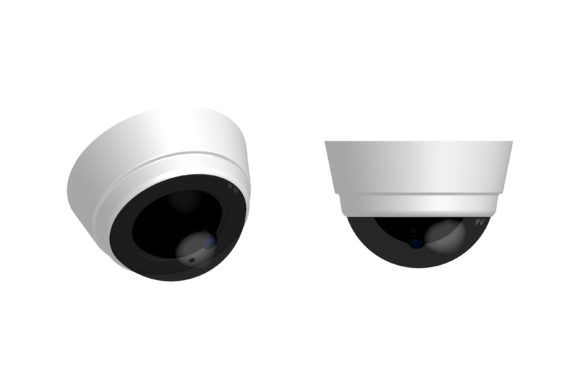
The transition from two-dimensional blueprints to immersive three-dimensional environments requires objects that possess accurate geometry, material properties, and lighting interactions. When an asset is described as being available in Round security camera in realistic 3D design on a white background, it signifies a level of isolation and versatility that streamlines the workflow for creators. These isolated vector files, often provided in formats like EPS and JPEG, serve as the foundational elements for complex scenes, ensuring that the final output meets rigorous professional standards.
The Anatomy of Photorealistic Surveillance Modeling
To understand the value of a Round Security Camera in Realistic 3D Design, one must first appreciate the technical challenges involved in modeling modern surveillance equipment. Unlike older, boxy CCTV units, contemporary cameras feature sleek, aerodynamic forms designed to blend into architectural aesthetics while maintaining robust functionality. The "round" designation refers to the spherical or dome-like housing that characterizes many indoor and outdoor security solutions.
Creating a realistic model involves meticulous attention to detail. It is not merely about creating a sphere with a lens; it requires simulating the physical properties of the materials used. This includes:
- Polymer Textures: High-quality plastics used in housings require subsurface scattering effects to mimic how light penetrates slightly into the material, giving it depth rather than looking like flat plastic.
- Optical Glass: The lens element must reflect the environment accurately. In a realistic 3D context, this means implementing physically based rendering (PBR) shaders that account for refraction and reflection indices.
- Metallic Accents: Mounting brackets and screws often utilize brushed aluminum or stainless steel, necessitating precise normal maps to capture surface imperfections.
When these elements are combined in a Round security camera in realistic 3D design on a white background, the result is an asset that can be easily integrated into any scene without color contamination or unwanted shadows. The isolation provided by the white background allows designers to apply custom lighting setups immediately, ensuring the camera looks natural whether it is placed in a virtual office lobby or a darkened alleyway.
Strategic Applications Across Industries
The utility of these specialized 3D assets extends far beyond simple illustration. Different industries leverage the Round Security Camera in Realistic 3D Design to solve specific problems related to communication, planning, and user experience.
Architectural Visualization and Interior Design
For architects and interior designers, the placement of security cameras is a sensitive topic. Clients often worry about the aesthetic impact of surveillance equipment. By utilizing a realistic 3D model, designers can present clients with a pre-visualization of how the camera will look in their space. This transparency builds trust and allows for adjustments before installation occurs. The ability to render the camera in different lighting conditions helps demonstrate how the device will interact with the room's ambiance.
Gaming and Virtual Reality Development
In the realm of interactive media, immersion is paramount. Game developers working on crime simulation, stealth, or horror genres require assets that do not break the player's suspension of disbelief. A low-poly or poorly textured camera can ruin the atmosphere of a scene. Using a high-fidelity Round security camera in realistic 3D design ensures that NPCs (non-player characters) react appropriately to surveillance, and that players perceive the threat accurately within the game world.
Sales and Marketing Presentations
Security system integrators and hardware manufacturers rely heavily on visual aids to sell their products. Instead of sending static images from a catalog, sales professionals can use dynamic 3D renders to showcase the product's features. They can rotate the view, zoom in on the lens technology, or place the camera in a simulated real-world scenario. The availability of Isolated vector Files included - Eps - Jpeg further enhances this capability, allowing marketers to create print-ready brochures and web graphics that scale without losing quality.
Technical Advantages of Vector and Raster Integration
The mention of Isolated vector Files included - Eps - Jpeg highlights a crucial aspect of modern asset management: format versatility. While the core discussion focuses on 3D design, the inclusion of 2D formats provides a comprehensive toolkit for diverse workflows.
- Scalability with EPS: Encapsulated PostScript (EPS) files are vector-based, meaning they can be scaled to any size without pixelation. This is essential for large-format printing, such as banners at trade shows or detailed diagrams in technical manuals. For a Round Security Camera in Realistic 3D Design, the vector version captures the silhouette and key details perfectly, serving as a reliable reference for layout artists.
- Immediate Usability with JPEG: Joint Photographic Experts Group (JPEG) files offer a rasterized preview that is ready for immediate use in presentations, social media posts, or quick mockups. The white background mentioned in the specification ensures that these images can be dropped into any design software without requiring time-consuming background removal processes.
This multi-format approach supports the principle of efficiency. A single purchase or download provides the necessary assets for both high-end 3D rendering pipelines and standard graphic design tasks, maximizing the return on investment for the user.
Implementation Considerations for Creators
While the assets themselves are high-quality, successful implementation depends on how the creator utilizes them. To achieve the best results with a Round security camera in realistic 3D design on a white background, several factors must be considered during the integration process.
Lighting Consistency
One of the most common pitfalls in 3D composition is mismatched lighting. If a camera model is rendered with a studio setup but placed into a scene lit by harsh midday sun, the result will look artificial. The white background of the source file is beneficial because it does not cast colored reflections onto the camera. However, the artist must ensure that the environment map used in their 3D software matches the intended setting. Shadows must fall in the correct direction, and specular highlights must align with the primary light sources.
Scale and Proportion
Realism is heavily dependent on scale. A security camera model might look perfect in isolation, but if it is too large relative to a door frame or a human figure in the scene, the illusion breaks. Professional users should always verify the dimensions of the imported model against real-world measurements. Standard dome cameras usually have a diameter ranging from 6 to 12 inches. Ensuring the 3D model adheres to these proportions is vital for authenticity.
Material Accuracy
The "realistic" aspect of the design relies on PBR (Physically Based Rendering) workflows. When importing the model, check the texture maps. Are there roughness maps? Normal maps? Displacement maps? These textures dictate how the surface interacts with light. A glossy finish on a camera meant to be matte will look wrong. Conversely, a matte finish on a glass lens is a clear error. Understanding the material properties allows for better customization when the asset needs to be modified for specific brand colors or environmental wear and tear.
Evolving Trends in Surveillance Visualization
The market for digital assets is shifting towards greater interactivity and realism. As Augmented Reality (AR) becomes more prevalent in consumer applications, the need for optimized, yet realistic, 3D models increases. A Round Security Camera in Realistic 3D Design that works well in a desktop renderer must also be optimized for mobile devices to function effectively in AR apps.
Furthermore, the trend towards smart homes and IoT (Internet of Things) is changing the aesthetic of security cameras. Modern designs are increasingly minimalist, often hiding the camera behind glass domes that are nearly invisible. Consequently, the 3D models must reflect this subtlety. The focus is no longer on the "eye" of the camera but on the seamless integration of the device into the home's architecture. Assets that capture this nuance are becoming highly sought after by creators focusing on lifestyle and smart home content.
Additionally, the educational sector is adopting these tools for training purposes. Police academies and corporate security training programs use 3D simulations to teach officers and employees about blind spots and optimal camera placement. In these scenarios, the accuracy of the Round security camera in realistic 3D design directly impacts the effectiveness of the training. If the field of view or the physical obstruction capabilities of the camera are modeled incorrectly, the lessons learned may not translate to real-world situations.
Selecting the Right Asset for Your Workflow
When evaluating options for a Round Security Camera in Realistic 3D Design, professionals should look beyond the visual appeal. The technical specifications of the file are equally important. Does the model include separate parts for the lens and the housing? Can the rotation axis be adjusted? Is the topology clean for animation?
Furthermore, the licensing terms should be reviewed carefully. Some assets are restricted to personal use only, while others allow for commercial exploitation. Given the broad audience that includes business owners and educators, understanding these rights is crucial to avoid legal complications. The inclusion of Isolated vector Files included - Eps - Jpeg suggests a comprehensive package, but verifying the scope of usage rights ensures peace of mind.
Ultimately, the choice of asset dictates the quality of the final output. Whether the goal is to create a stunning marketing campaign, a functional game environment, or an educational tool, the foundation lies in the quality of the 3D model. A well-crafted camera model serves as a beacon of professionalism, signaling to the audience that the entire project has been treated with care and attention to detail.
Conclusion on Digital Precision
The journey from a concept to a realized digital environment is paved with the right tools. The Round Security Camera in Realistic 3D Design stands as a testament to the advancements in digital modeling and rendering technologies. By offering a versatile solution that combines photorealism with practical file formats like EPS and JPEG, these assets empower a wide range of users to communicate complex ideas clearly.
From the initial sketch to the final render, the presence of a high-quality security camera model adds a layer of credibility and immersion that is difficult to replicate with lower-quality alternatives. As technology continues to advance, the importance of accurate, isolated, and realistic 3D assets will only grow, making them an indispensable part of the modern creator's toolkit.