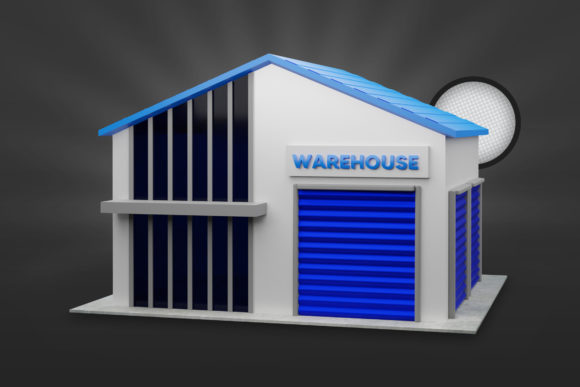
Unlocking Visual Potential: How to Leverage Warehouse 3D Render PSD for High-Impact Marketing
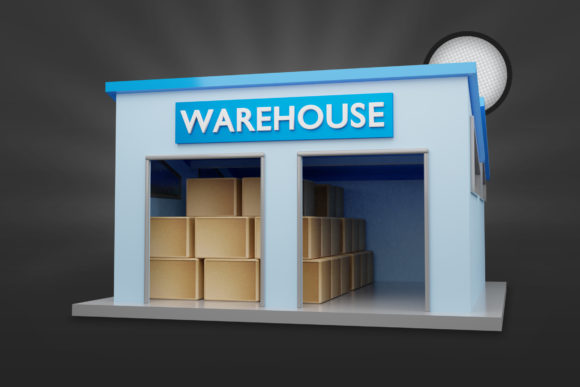
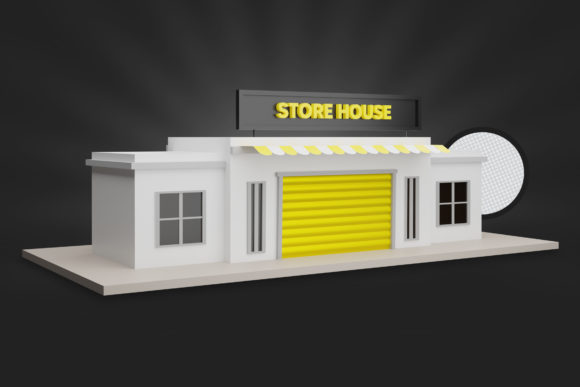
In the fast-paced world of digital marketing and interior design, visual communication is not just an advantage; it is a necessity. Whether you are a logistics manager showcasing a new facility, a real estate developer presenting a commercial project, or a graphic designer creating a promotional campaign, the quality of your imagery defines your credibility. This is where the Warehouse or Storehouse 3D Render PSD becomes an indispensable asset. Unlike static photographs that are limited by location, lighting, and season, a high-resolution 3D render offers a flexible canvas for creativity.
This article explores the transformative power of using a 3D render PSD file as a PNG for various banner and template designs. We will delve into what these files are, why they are superior to traditional photography for specific use cases, and how you can effectively integrate them into your workflow to achieve professional results without breaking the bank.
Understanding the Core Asset: What is a Warehouse 3D Render PSD?
To fully appreciate the utility of this resource, one must first understand its technical composition. A PSD (Photoshop Document) file is a layered image format native to Adobe Photoshop. When applied to a 3D scene, such as a warehouse or storehouse, the file contains separate layers for different elements of the environment. These layers might include the floor texture, shelving units, lighting effects, background walls, and even specific props like pallets or forklifts.
The "3D Render" aspect refers to the computer-generated imagery (CGI) that simulates reality. The creator has built a virtual space using specialized software, applying realistic materials, shadows, and perspective. When this scene is exported as a PSD, the artist ensures that every component remains editable. This means you are not looking at a flat, unchangeable picture; you are looking at a modular construction set.
Key Takeaway: The value lies in the editability. You can isolate specific parts of the warehouse, change their colors, remove unwanted objects, or add your own branding elements while maintaining the photorealistic integrity of the original 3D model.
The Strategic Advantage of Converting to High-Resolution PNG
While the PSD file is the source material for editing, the final output often needs to be a PNG (Portable Network Graphics). Why make this conversion? The answer lies in compatibility and transparency.
A standard JPEG image compresses data, which can lead to artifacts and loss of detail. A PNG, however, supports lossless compression and, most importantly, transparent backgrounds. By extracting the warehouse scene from the PSD and saving it as a high-resolution PNG, you gain the ability to place the 3D structure over any background color, pattern, or gradient without seeing a white box around the edges.
This flexibility is crucial for modern web design and print media. Imagine you need to create a banner for a logistics company's website. Instead of taking a photo of a generic warehouse that might look dated or cluttered, you can take your clean 3D render PNG and overlay it on a sleek blue gradient that matches your brand identity. The result is a custom, polished look that stands out immediately.
- Scalability: High-resolution renders allow you to zoom in or scale up the image for large-format printing without pixelation.
- Transparency: Remove the background entirely to blend the warehouse seamlessly into complex layouts.
- Consistency: Ensure that your visual assets look identical across all platforms, from mobile screens to billboards.
Practical Applications in Business and Design
The versatility of a Warehouse 3D Render PSD extends far beyond simple decoration. It serves as a foundational tool for several critical business functions.
1. Dynamic Banner and Ad Campaigns
In digital advertising, attention spans are fleeting. A static image of a warehouse might fail to capture interest. However, a dynamic banner featuring a 3D render allows you to highlight specific features. For instance, if you are promoting a new storage solution, you can use the PSD layers to insert a "New Arrival" badge directly onto a shelf, then export the updated image as a PNG for your Google Ads campaign. Because the layers are separated, you can easily update the text or graphics later without needing to re-render the entire 3D scene.
2. Real Estate and Commercial Proposals
Developers often sell spaces before they are built. A photograph cannot show a future state, but a 3D render can. By using the PSD file, architects and agents can present potential clients with a hyper-realistic view of what a finished storehouse will look like. They can customize the rendering to match the client's preferred color scheme or equipment layout, making the proposal feel personalized and tangible.
3. Educational and Training Materials
In the realm of safety training or logistics education, clarity is paramount. Using a 3D render allows educators to strip away unnecessary distractions. You can use the PSD to isolate specific areas, such as loading docks or fire exits, and create step-by-step visual guides. Exporting these isolated sections as PNGs makes it easy to embed them into PDF manuals or online learning modules.
Bridging the Gap: From Concept to Final Template
One of the most common misconceptions about 3D renders is that they are rigid and difficult to modify. In reality, when working with a well-structured PSD, the process is intuitive. Here is how the workflow typically unfolds for a designer:
- Import and Analyze: Open the PSD file in Photoshop. Review the layer stack to understand the organization of the scene.
- Customization: Hide or delete layers that do not fit your theme. If you need to change the wall color, simply select the texture layer and apply a solid color fill or adjustment layer.
- Integration: Place your logo, text, or product images on top of the warehouse scene. Use blending modes to ensure the text looks natural against the 3D background.
- Export for Web/Print: Once satisfied, flatten the necessary layers or save the specific element as a high-resolution PNG. Ensure the resolution is set to 300 DPI for print or optimized for web viewing.
This workflow empowers designers to create unique templates rapidly. Instead of starting from scratch for every new project, you have a robust base asset that can be adapted endlessly.
Addressing Common Misunderstandings
It is important to clarify a few points regarding the usage of these assets to ensure you get the best results.
Misconception 1: "It looks fake."
Modern 3D rendering technology has reached a point where the line between reality and simulation is nearly invisible. When done correctly, a 3D render captures lighting physics, material textures, and depth perception better than many consumer-grade cameras. The key is to use high-quality source files and avoid over-saturating the colors during post-processing.
Misconception 2: "I need expensive software to use it."
While the creation of the PSD requires advanced 3D software, the usage of the file does not. You only need a standard image editor like Adobe Photoshop, GIMP, or even Canva (with some limitations) to manipulate the PNG export. The heavy lifting was done by the 3D artist; your job is simply to assemble the pieces.
Misconception 3: "It's only for industrial companies."
The aesthetic of a warehouse—clean lines, organized structures, and functional beauty—is increasingly popular in modern minimalism. Startups, tech companies, and creative agencies often use industrial-style imagery to convey stability, efficiency, and forward-thinking innovation.
Maximizing Value in the Digital Age
In an era where content consumption is dominated by visuals, having access to high-quality, adaptable assets is a competitive advantage. The Warehouse or Storehouse 3D Render PSD represents more than just a picture; it is a strategic tool that bridges the gap between imagination and execution.
By converting this PSD into a high-resolution PNG, you unlock a world of possibilities for banners, templates, and presentations. You gain the freedom to tailor the visual narrative to your specific audience, whether that involves highlighting safety protocols, showcasing storage capacity, or simply adding a touch of industrial elegance to your brand identity.
Whether you are a seasoned graphic designer or a business owner looking to improve your online presence, understanding how to leverage these resources is essential. Don't settle for generic stock photos that lack impact. Embrace the flexibility of 3D renders, experiment with the layers, and watch your visual communications transform into powerful tools for growth and engagement.
As technology continues to evolve, the demand for high-fidelity, customizable imagery will only increase. By mastering the use of PSD-based 3D renders today, you are preparing your brand for a future where visual excellence is the standard.