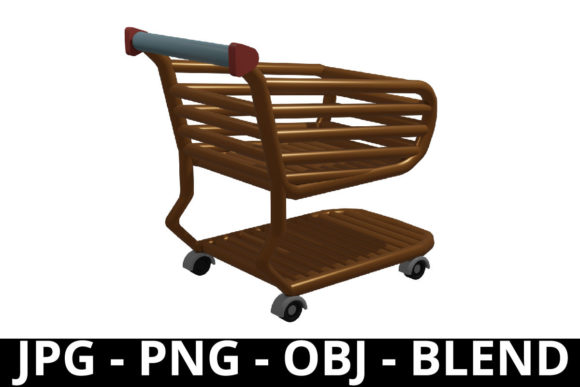
3d Render Trolley Cart for Design: The Ultimate Asset for Modern Visual Projects
In the fast-paced world of digital visualization, finding the right asset can make the difference between a generic background and a compelling scene. Enter the 3d Render Trolley Cart for Design, a meticulously crafted object that serves as the backbone for countless e-commerce, retail, and consumer product presentations. This isn't just another empty prop; it is a versatile tool designed to bridge the gap between abstract concepts and tangible shopping experiences. Whether you are an architect visualizing a new supermarket layout or a marketing agency preparing a campaign for a hypermarket chain, this trolley cart offers the realism and flexibility needed to bring your vision to life.
Why This Asset Transforms Product Visualization
When you are working on a design project, the context is everything. A product sitting in isolation looks like a catalog entry, but place it inside a realistic shopping environment, and it becomes a story about consumption, lifestyle, and choice. The 3d render trolley cart perfect for design projects provides that immediate sense of scale and utility. It allows designers to simulate the real-world journey of a customer from selection to purchase without needing to stage a physical photoshoot.
The strength of this asset lies in its minimalist yet detailed construction. It captures the essence of a modern pushcart—featuring sleek metallic finishes, functional wheels, and ergonomic handles—while remaining clean enough to not distract from the primary subject. This balance is crucial when the goal is to highlight a specific grocery item, a luxury cosmetic product, or a new line of household goods. By using this isolated object, you ensure that the viewer's eye is drawn exactly where you want it, guided by the natural lines of the cart itself.
Real-World Applications Across Industries
The versatility of this 3D model extends far beyond simple illustration. Different industries find unique ways to leverage the 3d render trolley cart to solve specific communication challenges.
- E-Commerce and Online Retail: In the digital marketplace, images must do the heavy lifting. An online shopper cannot touch the product, so they rely on imagery that suggests usability. Placing a bag of coffee or a bottle of shampoo inside a rendered shopping cart creates an instant psychological connection. It simulates the "add to cart" action visually, making the purchasing process feel more intuitive and grounded in reality.
- Retail Architecture and Store Planning: For architects and interior designers planning a new space, spatial accuracy is paramount. Using a high-fidelity trolley model helps visualize aisle widths, traffic flow, and storage capacity within a hypermarket or supermarket. It allows stakeholders to see how customers will navigate the store, ensuring that the layout is both efficient and inviting before a single shelf is built.
- Advertising and Marketing Campaigns: Creative directors often need to produce visuals that feel authentic but require total control over lighting and composition. A metallic trolley with reflective surfaces offers a dynamic canvas for light studies. Advertisers can use the cart to showcase bulk buying scenarios, seasonal sales events, or promotional bundles, creating a narrative of abundance and value.
- Product Packaging Development: Before a new package hits the shelves, designers need to test how it looks in a crowded environment. Rendering a new cereal box alongside other items in a shopping cart helps identify branding issues or visibility problems. It acts as a virtual focus group, providing early feedback on how the product competes for attention.
Understanding the Technical Flexibility
One of the most significant advantages of this asset is the comprehensive file format included in the ZIP folder. The inclusion of JPG and PNG files ensures that users can quickly drop high-resolution renders into their presentations or web layouts without complex rendering times. These pre-rendered views often capture dramatic angles and lighting setups that would take hours to recreate manually.
However, the true power emerges with the OBJ and BLEND files. For 3D artists who need to customize the scene, these formats offer complete freedom. You can adjust the metallic texture to match a specific brand color, modify the wheel size to fit a different aesthetic, or even animate the cart moving through a simulated store environment. The pushcart structure is modeled with clean topology, meaning it deforms well if you decide to add custom modifications or integrate it into a larger, animated sequence.
Key Considerations for Effective Usage
While the 3d render trolley cart is a powerful tool, getting the best results requires thoughtful application. Here are some practical observations to keep in mind when integrating this object into your workflow.
Lighting Consistency is Non-Negotiable
The metallic finish of the cart reflects its surroundings. If your lighting setup is flat or inconsistent, the reflections on the handle and basket will look artificial, breaking the immersion. Always ensure that the light sources in your scene match the intended environment—whether it is the bright, diffuse light of a grocery aisle or the moody spotlight of a boutique display.
Scale Matters More Than You Think
A common pitfall is placing the cart in a scene without accurate reference objects. If the trolley appears too large compared to the products inside, the image loses credibility. Use standard dimensions for your products (like a 500ml water bottle or a standard loaf of bread) to anchor the cart in a realistic scale. This attention to detail reinforces the commercial authenticity of the image.
Contextual Relevance
Not every design needs a cart. Overusing the prop can make a design feel cluttered or forced. Ask yourself: does this image tell a better story with the trolley? If you are selling a single luxury item, sometimes a clean, isolated shot is superior. However, if the narrative involves volume, variety, or the act of shopping, the grocery container becomes an essential storytelling device.
Maximizing the Commercial Potential
In today's competitive market, visual differentiation is key. The consumer expects high-quality, realistic imagery that mimics the physical world. By utilizing a professional-grade 3d render of a trolley, brands can elevate their visual identity. It signals professionalism and attention to detail, traits that build trust with potential buyers.
Furthermore, the ability to rapidly iterate on designs saves time and resources. Instead of renting a studio, hiring models, and transporting physical props, designers can manipulate the empty cart in a virtual space. They can swap out products instantly, change the floor texture from polished concrete to wood, or alter the background from a busy market to a serene space. This agility allows teams to test multiple creative directions in a fraction of the time required for traditional production.
Ultimately, the 3d Render Trolley Cart for Design is more than just a digital object; it is a strategic asset. It empowers creators to explore the nuances of the retail experience, offering a flexible platform for innovation. Whether you are designing for a local shop or a global e-commerce giant, having this tool in your library ensures that your projects remain relevant, engaging, and visually stunning. As the industry moves towards more immersive digital experiences, the demand for high-quality, adaptable 3D assets like this will only continue to grow, making it an investment worth considering for any forward-thinking designer.