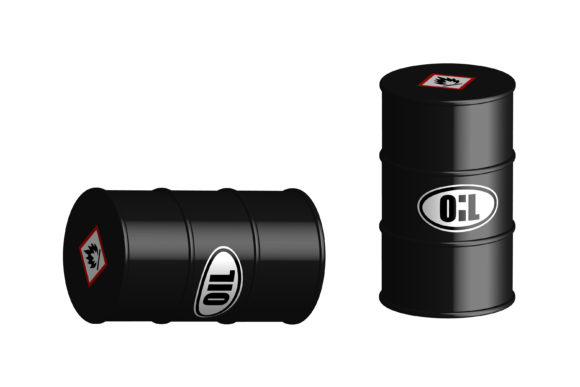
Understanding Oil Barrels Isolated on Transparent Back for Professional Visual Projects
In the realm of digital asset creation, finding the right visual element can significantly impact the effectiveness of a design. Among the most requested resources are Oil Barrels Isolated on Transparent Back assets that feature realistic 3D designs. These images serve as foundational components for a wide array of projects, from industrial marketing materials to educational infographics and web interface elements. Unlike flat illustrations or photographs with complex backgrounds, these specific assets offer a unique level of versatility that allows designers to integrate heavy machinery visuals seamlessly into any composition.
The concept of isolating an object on a transparent background is straightforward in theory but requires precision in execution. When applied to oil barrels isolated on transparent background, the result is a high-fidelity representation of industrial storage units that appear to float within your workspace. This technique removes all environmental context—such as factory floors, sky lines, or warehouse walls—leaving only the barrel itself. The transparency ensures that when placed over a new background, there are no jagged edges, white boxes, or mismatched lighting artifacts to distract the viewer.
Distinguishing Features of Realistic 3D Renders
What truly sets high-quality 3D renders apart from standard stock photography is the control over every physical property of the object. A realistic 3D oil barrel model is constructed using advanced polygonal geometry and textured with high-resolution maps that simulate metal wear, rust, grease stains, and label details. This level of detail is often impossible to capture perfectly in a single photograph without extensive post-processing.
When you select Oil Barrels Isolated on Transparent Back assets created through 3D rendering, you are choosing an image where the lighting has been artificially optimized. The shadows, highlights, and reflections are calculated to look natural regardless of the environment they are eventually placed into. For instance, a 3D render can be designed with a neutral key light that mimics studio conditions, making it easier for a designer to match the barrel's lighting to a custom background later. In contrast, a photograph taken on-site might have harsh overhead fluorescent lights or deep shadows that are difficult to correct without altering the integrity of the image.
Furthermore, the isolation process in 3D is inherent to the workflow. Since the object exists in a virtual space, the "background" does not exist until the final frame is rendered. This means the transparency is mathematically perfect, unlike photo editing which relies on algorithms to cut out objects, often leaving behind semi-transparent pixels or color fringing around the edges.
Evaluating Use Cases and Design Flexibility
The primary advantage of using these isolated assets lies in their adaptability. Designers frequently encounter scenarios where a specific visual metaphor is needed but cannot be sourced through traditional photography. Consider a scenario where a financial report needs to illustrate energy market volatility. Placing a realistic oil barrel directly onto a graph or a colorful infographic requires an image that does not clash with the existing color palette. An oil barrel isolated on transparent background solves this by allowing the user to adjust the barrel's hue, saturation, or even add custom labels without worrying about the original background interfering.
- Marketing Collateral: Brochures and flyers for energy companies often require imagery that looks professional yet distinct. Using a 3D render allows for a clean, modern aesthetic that stands out against text-heavy layouts.
- Web and App Interfaces: Icons and hero images for websites dealing with logistics or commodities need to load quickly and scale well. Vector-based or high-resolution 3D assets work better here than heavy photographic files.
- Education and Training: Safety manuals and technical guides benefit from clear, uncluttered diagrams. Isolating the barrel helps focus attention on the object's features, such as valves, rims, or warning labels.
The ability to manipulate these assets extends beyond simple placement. Because the source is often a 3D model, designers can sometimes request variations in angle, size, or condition. While a photographer must physically move the camera or the prop, a 3D artist can rotate the digital model to show the bottom, top, or side profile instantly. This flexibility is particularly valuable when creating a series of images that need to maintain consistency in style and lighting.
Comparing Alternatives: Photography vs. 3D Rendering
While Oil Barrels Isolated on Transparent Back offers significant benefits, it is important to understand how it compares to other methods of acquiring similar imagery. The most common alternative is sourcing a photograph of a real barrel and removing the background manually. Another option involves using 2D vector illustrations or flat icons.
Photography provides a sense of authenticity that is hard to replicate. If a project demands a gritty, documentary-style feel, a real photograph of a weathered barrel in a dusty yard might be more appropriate than a pristine 3D render. However, achieving isolation from a photo is labor-intensive. It requires skilled retouching to handle complex reflections on the curved metal surface. Metal barrels reflect their surroundings; if the background was a blue sky, those blue tones will linger on the barrel's curves even after the sky is removed. Correcting this requires time-consuming manual painting or advanced masking techniques.
In comparison, 3D renders allow for complete control over reflections. A designer can ensure the barrel reflects only the intended environment or remains neutral. This makes the 3D approach superior for projects requiring strict brand guidelines or specific color matching. However, the tradeoff is cost and realism. Poorly executed 3D models can look plastic or artificial, lacking the subtle imperfections of real-world objects like dents, scratches, and uneven paint.
2D illustrations offer a different set of advantages. They are lightweight, scalable, and stylistically consistent with flat design trends. Yet, they lack the tactile depth and volume that a realistic 3D barrel provides. If the goal is to convey the weight, danger, or industrial nature of the object, a flat icon may fall short. The decision often comes down to the desired emotional tone of the project: do you want the viewer to feel the reality of the industry (photography/3D) or simply understand the concept (illustration)?
Decision Factors and Potential Limitations
Selecting the right asset type requires evaluating specific project constraints. One of the primary limitations of relying solely on oil barrels isolated on transparent background images is the potential for overuse. Because these assets are popular and versatile, they can appear in many places, leading to a generic look if not used creatively. To avoid this, designers often modify the assets—adding custom textures, changing the scale, or combining them with other elements to create a unique composition.
Another factor to consider is the file format and resolution. High-quality 3D renders are typically delivered as PNG files with alpha channels. While these support transparency, they can become large in file size if the resolution is extremely high. For web use, optimization is necessary to ensure fast loading times without sacrificing the crispness of the barrel's edges. Conversely, for print media, the resolution must be sufficient to prevent pixelation when scaled up.
There are also legal and licensing considerations. Not all online assets come with the same usage rights. Some licenses restrict commercial use, while others prohibit modification. Before integrating Oil Barrels Isolated on Transparent Back into a client project, it is crucial to verify the license terms. Additionally, ensuring that the 3D model accurately represents the type of barrel required (e.g., standard steel drum, hazardous material container, or specific color coding) is essential for accuracy in industrial contexts.
When to Choose This Approach
The ideal scenario for utilizing oil barrels isolated on transparent background assets is when the design requires a balance of realism and flexibility. If you are building a composite image where the barrel needs to interact with multiple light sources or sit on a non-existent surface, 3D renders are the superior choice. They eliminate the "cut-out" look that plagues poorly edited photos and provide a clean slate for creative direction.
However, if the project timeline is extremely tight and the budget is low, a well-edited photograph might suffice, provided the background removal is done correctly. Similarly, if the design aesthetic is strictly minimalist or cartoonish, a 3D render might be too detailed and distracting. In those cases, a stylized illustration would be more appropriate.
Ultimately, the value of these assets lies in their ability to bridge the gap between abstract concepts and tangible reality. By providing a realistic 3D design that is free from environmental distractions, they empower creators to build narratives around energy, logistics, and industry without being constrained by the limitations of physical photography. Whether for a high-end corporate presentation or a dynamic website banner, understanding the strengths and tradeoffs of Oil Barrels Isolated on Transparent Back ensures that the final visual communication is both effective and professional.