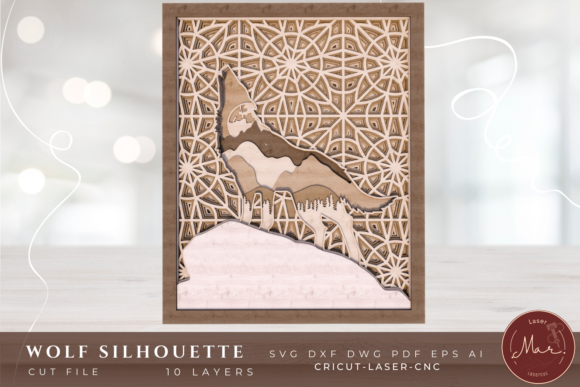
Multilayer Laser Cut 3D Wolf: A Strategic Asset for Creative Workflows
In the landscape of modern digital fabrication and creative production, the Multilayer Laser Cut 3D Wolf represents more than just a decorative vector; it is a versatile component that integrates seamlessly into diverse professional and personal workflows. This specific design, featuring a wolf silhouette interwoven with intricate mandala art across five distinct layers, offers a high degree of customization and scalability. Whether you are a small business owner looking to expand your product line, an educator creating interactive materials, or a hobbyist seeking a unique home decor project, understanding how to implement this asset effectively is crucial for maximizing its value.
Understanding the Core Design and Technical Specifications
The foundation of this project lies in the precise geometry of the Multilayer Wolf Silhouette with Mandala Art - 3D with 5 layers. The design is not a single flat image but a composite structure consisting of five separate files that, when assembled, create depth and dimension. The finished product dimensions are specified at 367 x 450 mm (14.4 x 17.7 inches), though the true power of this vector asset is its inherent scalability. Because the source files are vector-based, they can be resized within the cutting software without losing resolution, allowing you to adapt the design to fit specific spatial constraints or material requirements.
Upon downloading the ZIP folder, you will receive a comprehensive suite of file formats including AI, EPS, SVG, DWG, DXF, and PDF. This multi-format approach ensures compatibility across various hardware ecosystems. For instance, CNC laser machines typically rely on DXF or DWG files for precise pathing, while vinyl cutters like Cricut or Silhouette work best with SVG or EPS formats. Having all these variations in a single package eliminates the need for third-party conversion tools, thereby streamlining the preparation phase of your workflow and reducing the risk of file corruption or data loss during translation.
Integration into Professional Production Pipelines
For entrepreneurs and makers operating within a production environment, the Multilayer Laser Cut 3D Wolf serves as a critical intermediate asset. The process begins with planning. Before initiating any cut, you must analyze the intended use case. Are you producing wall art for a retail store, custom signage for an event, or educational models for a classroom? The decision dictates the material choice and the subsequent assembly method.
When integrating this design into a commercial workflow, efficiency is paramount. The instruction manual suggests painting the layers before assembly, but in a high-volume setting, pre-painted substrates or specialized coatings might be more efficient. However, the flexibility of the design allows for post-processing adjustments. If you are using a CNC machine, you can adjust the nesting parameters to minimize material waste. The five-layer structure requires careful management of the cutting order. In a professional setting, you would likely organize the layers by size or complexity to optimize machine time, ensuring that the most intricate mandala details are cut with appropriate speed and laser power settings.
Furthermore, the ability to edit the file yourself provides a significant advantage over purchasing pre-made physical goods. You can modify the spacing between layers to alter the depth of the final 3D effect. This level of control allows you to tailor the aesthetic to match existing branding guidelines or interior design themes. For example, increasing the gap between layers creates a more dramatic shadow effect, while decreasing it results in a tighter, more cohesive silhouette. This iterative capability is essential for maintaining quality control and consistency across multiple units.
Practical Applications Across Different Sectors
The utility of this 3D wolf design extends far beyond simple decoration. Its application varies significantly depending on the sector and the specific goals of the user.
- Retail and E-commerce: Small business owners can utilize the Multilayer Wolf Silhouette to create unique gift items. The design's intricate mandala pattern appeals to consumers looking for artisanal, handcrafted aesthetics. By offering customization options—such as color variations or size adjustments—you can differentiate your products from mass-market competitors. The versatility of the design also allows for bundling strategies, where the wolf motif is used across different product lines, from coasters to large wall panels.
- Educational and Institutional Use: Educators and librarians can employ this asset to teach concepts related to geometry, layering, and spatial reasoning. The five-layer structure provides a tangible way to demonstrate how 2D vectors translate into 3D objects. It fits perfectly into STEM (Science, Technology, Engineering, and Mathematics) curricula focused on digital fabrication. Students can engage with the process of importing files, adjusting scale, and physically assembling the model, reinforcing their understanding of technical drawing and manufacturing processes.
- Interior Design and Architecture: Professionals in interior design can use the Multilayer Laser Cut 3D Wolf as a focal point in residential or commercial spaces. The mandala art adds a cultural and artistic element that complements various design styles, from bohemian to contemporary. When presenting a concept to a client, showing a rendered version of the assembled layers helps visualize the final outcome. The ability to adjust the size means the design can scale from a small accent piece to a massive architectural feature, provided the structural integrity of the chosen material supports the weight.
Workflow Optimization and Assembly Strategy
Successful implementation of this project relies heavily on the execution phase. Once the files are prepared and sent to the cutting machine, the focus shifts to assembly. The instructions specify placing the layers in the order found in the reference image. This step is non-negotiable for achieving the intended visual effect. In a practical workflow, it is advisable to label each layer immediately after cutting to prevent confusion during assembly.
Consider the tools required for assembly. Depending on the material thickness, you may need adhesive spacers, double-sided tape, or specialized mounting hardware. The goal is to maintain consistent spacing across all five layers. If the layers are misaligned, the 3D illusion collapses, resulting in a visually unappealing product. Therefore, establishing a jig or a template for alignment can significantly improve accuracy and reduce rework. This attention to detail is what separates a amateur project from a professional-grade output.
Painting and texturing represent another critical stage in the workflow. While the design allows for endless color possibilities, consistency is key. If you are producing multiple units, establish a standard color palette and finish type. Using a spray booth or a controlled environment ensures even coverage and prevents drips or uneven textures. The mandala details require precision; fine brushes or airbrushing techniques may be necessary to highlight the intricate patterns without obscuring the wolf silhouette.
Long-term Viability and Adaptability
Investing in the Multilayer Laser Cut 3D Wolf vector design offers long-term benefits due to its adaptability. Unlike static images or fixed-size prints, this vector asset remains relevant regardless of changing trends or project requirements. As your skills evolve or new materials become available, you can experiment with different combinations of wood, acrylic, metal, or paper. The open nature of the file formats (AI, EPS, SVG) ensures that you are not locked into a specific proprietary software ecosystem.
Moreover, the design serves as a robust resource for testing new cutting technologies. As you upgrade your equipment or explore new cutting methods, such as waterjet or plasma cutting, the vector paths remain valid. This future-proofs your investment, allowing you to pivot your production capabilities without needing to purchase new designs. For freelancers and consultants, having a library of high-quality, versatile assets like this enhances your service offerings and allows you to respond quickly to client requests.
In conclusion, the Multilayer Wolf Silhouette with Mandala Art is a strategic tool that bridges the gap between digital design and physical reality. By understanding its technical specifications, integrating it thoughtfully into your workflow, and paying close attention to the assembly and finishing processes, you can unlock its full potential. Whether used for commercial gain, educational enrichment, or personal expression, this 3D design stands out as a testament to the power of thoughtful planning and precise execution in the world of digital fabrication.