Transforming Flat Designs into Dimensional Art with Layered Mandala SVG and 3D Mandala SVG
The world of digital crafting has evolved significantly, moving beyond simple two-dimensional cutouts to complex, multi-layered structures that bring art to life. At the forefront of this transformation are Layered Mandala SVG files and their dynamic application in creating 3d Mandala SVG designs. These digital assets serve as the blueprint for papercraft enthusiasts, professional designers, and educators who wish to bridge the gap between screen-based graphics and tangible, physical objects. By understanding the intricacies of these file types, creators can unlock a new dimension of artistic expression that combines geometric precision with organic beauty.
The Essence of Papercraft Geometry
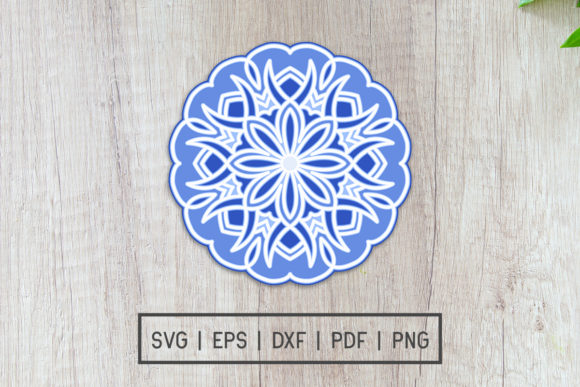
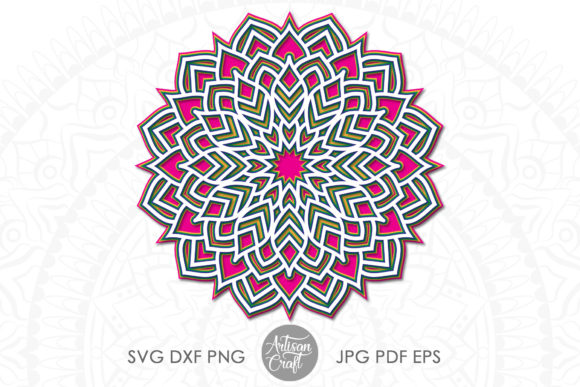
Mandala art is rooted in ancient traditions, symbolizing unity, harmony, and the cosmos. Traditionally, these designs were painted on paper or drawn with intricate detail using ink. However, modern technology has introduced a method to construct these patterns physically without the need for freehand drawing skills. This is where the concept of the Layered mandala SVG becomes essential. Unlike standard vector files that represent a single flat shape, layered files contain multiple distinct elements designed to be stacked. When assembled correctly, these layers create depth, shadows, and a three-dimensional form that mimics the complexity of a hand-drawn piece while offering structural integrity.
The transition from a digital file to a physical object relies heavily on the precision of the source data. A Layered mandala SVG acts as a papercraft template, providing specific instructions on how different parts of the design fit together. Each layer represents a slice of the final artwork, allowing the creator to build up the image piece by piece. This approach not only simplifies the construction process but also ensures that the final 3d Mandala SVG structure maintains its symmetry and balance, which are critical characteristics of mandala art.
Digital Precision Meets Physical Assembly
One of the most significant advantages of utilizing digital downloads for this type of project is the consistency and quality of the output. When you purchase a digital product, you receive a set of files that can be instantly downloaded and unzipped. The core of this package is the SVG format, which stands for Scalable Vector Image. As a cut file, the SVG contains mathematical paths rather than pixel grids, meaning the design can be resized to any dimension without losing clarity. This scalability is vital when adapting a design for different materials, whether it is thin cardstock for a classroom project or thicker foam board for a large-scale installation.
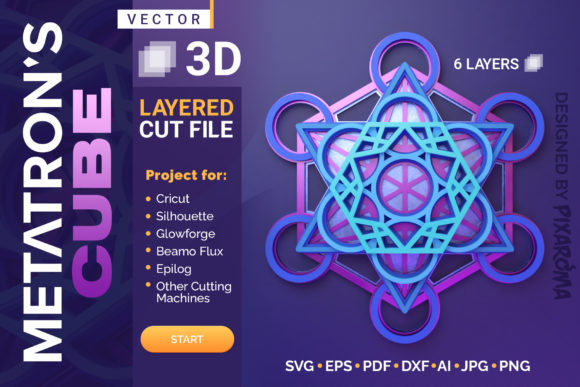
Beyond the primary vector file, the download typically includes a comprehensive suite of formats to accommodate various software requirements and use cases. For instance, the PNG format provides an image of the product on a transparent background, making it ideal for digital stamping or clipart usage. The JPG version offers a printable image with a white background, useful for reference guides or instructional materials. Furthermore, professionals working in CAD environments will find the DXF file indispensable, as it allows for precise engineering applications within Autodesk software. For graphic designers relying on Adobe Illustrator, the EPS file ensures compatibility with industry-standard tools, while the PDF serves as a universal printable document.
This variety in file types ensures that the Layered mandala SVG is accessible to a broad spectrum of users. Whether you are a hobbyist using a home cutting machine or a business owner producing custom decor, having access to multiple formats eliminates technical barriers. The total size of such a download is often around 7 MB, containing approximately 12″ x 12″ worth of high-resolution artwork. This compact yet powerful package allows for immediate implementation without the wait time associated with shipping physical templates.
Software Compatibility and Machine Integration
The versatility of these digital assets extends to the software and hardware used to bring them to life. The files are engineered to be compatible with a wide range of popular design and cutting platforms. Professionals and hobbyists alike frequently utilize Adobe Illustrator for detailed editing, taking advantage of the native support for SVG, EPS, and PDF files. For those focused on die-cutting and laser cutting, the integration with Cricut Design Space and Silhouette Studio is seamless. These programs allow users to import the vector paths, arrange the layers, and send direct commands to the cutting machines.
In addition to personal cutting machines, the Layered mandala SVG is optimized for industrial-grade equipment like the Glowforge. Laser cutters require precise vector paths to ensure clean cuts and accurate engraving, which the provided DXF and SVG files deliver. Similarly, users of Inkscape (a free open-source alternative) and Corel Draw can manipulate the designs to suit their specific workflow needs. The high resolution of 300 DPI in the raster images (PNG and JPG) ensures that even if a user chooses to print the layers manually rather than cut them, the output remains crisp and professional.
The ability to use these files across different machines democratizes the creation of complex 3D art. A teacher can prepare a lesson plan using the printable PDFs for students to assemble by hand, while a designer can use the same source files to generate rapid prototypes for client presentations. This flexibility highlights the practical relevance of the 3d Mandala SVG in diverse educational and commercial settings.
Practical Applications Across Industries
The utility of layered mandala designs transcends simple decoration. In the realm of education, these projects serve as excellent tools for teaching geometry, spatial reasoning, and patience. Students learn about symmetry, angles, and the relationship between 2D nets and 3D forms by assembling the Layered mandala SVG components. The tactile nature of papercraft reinforces learning outcomes, making abstract concepts concrete and understandable.
For interior designers and event planners, the 3d Mandala SVG offers a unique solution for backdrop creation and room accents. Unlike flat wall decals, a layered mandala casts subtle shadows and adds texture to a space, creating a focal point that changes appearance depending on the lighting. The ability to scale the design means that a single file can be used for small table centerpieces or massive stage installations. The high-quality output ensures that the final product looks expensive and meticulously crafted, regardless of the material used.
Artisans and crafters also benefit from these digital templates. Instead of spending hours designing a complex pattern from scratch, creators can start with a proven Layered mandala SVG and focus on customization. They might alter colors, adjust the number of layers, or combine multiple mandala designs to create entirely new compositions. This accelerates the creative process, allowing artists to produce more work in less time while maintaining a high standard of quality.
Considerations for Successful Implementation
While the potential of Layered mandala SVG files is vast, successful execution requires attention to detail during the assembly phase. The design of a 3d Mandala SVG relies on the correct ordering of layers. If the stacking sequence is incorrect, the visual depth may be lost, or the structure may become unstable. It is crucial to follow the provided instructions or the naming conventions inherent in the file organization to ensure proper alignment.
Material selection also plays a pivotal role in the final outcome. Thinner papers are suitable for intricate details and smaller models, whereas thicker cardstock or chipboard provides better support for larger, more ambitious projects. Users should consider the weight and stiffness of their chosen material relative to the size of the design. Since the artwork is typically sized at 12″ x 12″, scaling up the design may require adjusting the material choice to prevent warping or sagging over time.
Furthermore, the distinction between the cut file and the printable image is important. While the SVG and DXF files are intended for machine cutting, the PNG and JPG files are best suited for standard printing. If a user does not have access to a cutter, they can print the layers on a home printer and assemble the 3d Mandala SVG manually using adhesive. This accessibility ensures that the benefits of this technology are available to everyone, regardless of their equipment budget.
The Future of Digital Papercraft
As digital fabrication technologies continue to advance, the line between digital design and physical reality blurs further. The adoption of Layered mandala SVG files represents a shift towards more sustainable and customizable manufacturing. By downloading files instantly, consumers reduce waste associated with shipping and packaging. Creators can iterate on designs rapidly, testing different variations before committing to a final production run.
The ecosystem surrounding these files supports a global community of makers. Online forums and social media groups are filled with examples of how people are using 3d Mandala SVG templates to decorate homes, create gifts, and teach children. This shared knowledge base enhances the value of the initial purchase, as users can find tips, tricks, and inspiration from others who have tackled similar projects.
In conclusion, the integration of Layered mandala SVG and 3d Mandala SVG into the creative workflow offers a powerful way to transform simple digital vectors into stunning physical artworks. With a robust set of file formats, broad software compatibility, and endless application possibilities, these digital downloads empower users to explore the intersection of art, mathematics, and engineering. Whether for professional commissions, educational activities, or personal hobbies, the ability to instantly access and assemble these designs marks a significant step forward in the world of papercraft and 3D modeling.